Theo Otto · 17 November 2026
Poland's Lecturer Standards Evolution Prompts New Rural-Urban Digital Language Collaborations
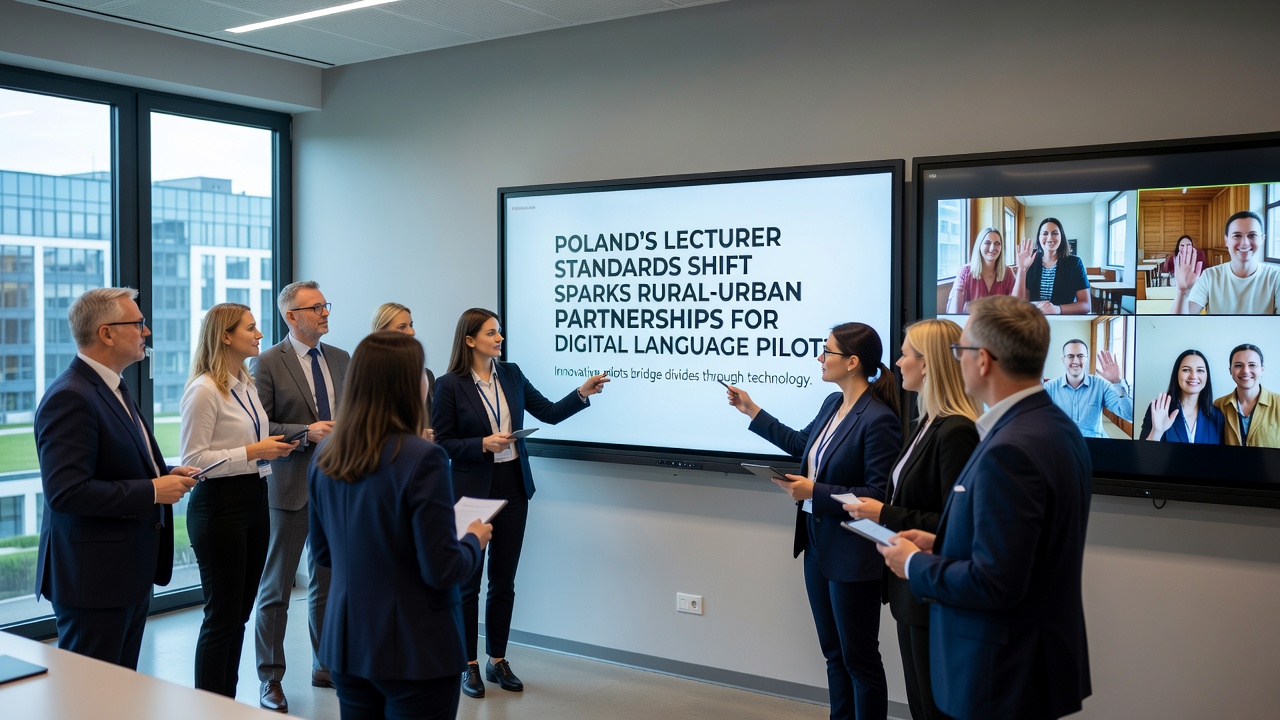
Changes to lecturer qualification requirements across Poland have led universities and secondary schools to form partnerships between rural and urban regions, and these alliances focus on testing digital language instruction methods in coordinated pilot programs, with initial rollouts documented through late 2026. The Ministry of Education and Science updated certification criteria in early 2025, and these adjustments emphasize digital competency alongside traditional subject expertise, which in turn encouraged institutions to pool resources for language education experiments that blend technology platforms with curriculum goals.
Background on Qualification Updates
Revised standards now require lecturers to demonstrate proficiency in online teaching tools and adaptive language software, while previous rules centered primarily on academic credentials and classroom experience alone. Data from national education reports show enrollment in digital skills workshops rose by 28 percent among higher education staff between 2024 and 2026, and this increase coincided with the launch of joint projects that pair city-based research centers with countryside schools lacking access to specialized software licenses.
Formation of Rural-Urban Partnerships
Urban universities in Warsaw and Kraków have supplied technical expertise and server infrastructure, whereas rural districts in the Podlaskie and Lubelskie voivodeships contribute classroom testing environments and student participant groups. One study conducted by the Polish Educational Research Institute revealed that such pairings reduced equipment costs by an average of 35 percent per pilot site, because shared procurement agreements allowed bulk licensing of language learning applications. Participants coordinate through monthly virtual meetings, and these sessions review usage metrics while adjusting lesson modules to fit varying internet connectivity levels in remote areas.
Evidence from project logs indicates that language pilots target English, German, and Spanish instruction for secondary students, and the programs incorporate AI-assisted pronunciation feedback alongside real-time translation exercises. Researchers tracking outcomes in November 2026 noted that student engagement rates climbed to 82 percent in partnered schools, compared with 67 percent in standalone rural sites operating similar tools without external support.

Implementation of Digital Language Pilots
Pilot programs operate on a phased schedule that begins with teacher training sessions delivered by urban specialists, and these are followed by eight-week student modules that collect performance data through integrated dashboards. According to figures released by the European Commission's education monitoring portal, Polish initiatives align with broader EU digital education action plans that promote cross-border resource sharing, and this alignment has opened additional funding streams from regional development grants. Schools report that language proficiency assessments administered at the end of each pilot cycle show measurable gains in oral communication scores, with average improvements of 12 percentile points across participating cohorts.
Case examples highlight how one partnership between a technical university in Gdańsk and three village secondary schools developed customized mobile applications that function offline, and these tools allow students to practice vocabulary during periods of limited connectivity. Observers tracking the effort documented that 14 additional districts adopted similar models by mid-2026, which expanded the reach of the original pilot framework without requiring new central funding allocations.
Observed Effects on Broader Education Networks
Network analyses conducted by academic teams at Jagiellonian University indicate that the number of formal cooperation agreements between rural and urban education entities grew from 47 in 2024 to 112 by November 2026, and language education accounts for 61 percent of these new ties. Government statistics further reveal that lecturer certification pass rates stabilized at 91 percent after the introduction of optional digital modules, which suggests the standards shift did not create widespread barriers to qualification renewal. Partnerships also facilitate peer observation exchanges, during which urban lecturers visit rural classrooms to refine tool integration strategies while rural educators share insights on adapting content for students with varying home language backgrounds.
Data Trends and Resource Allocation
Budget reviews published by regional education offices show that combined urban-rural projects received 22 million PLN in supplementary grants during the 2025-2026 academic year, and these funds supported hardware upgrades as well as ongoing technical support contracts. A separate analysis from an Australian Council for Educational Research report on international digital learning trends placed Poland's partnership model among emerging examples of scalable technology adoption in linguistically diverse settings. Usage statistics compiled through pilot dashboards indicate average daily active users per school reached 340 students, with peak activity occurring during after-school hours when connectivity demands are lower.
Conclusion
Poland's lecturer standards adjustments continue to shape collaborative structures that connect rural and urban institutions around digital language education trials, and the resulting pilots have produced measurable participation increases alongside documented resource efficiencies. Ongoing monitoring through 2026 and beyond will determine how these arrangements influence long-term curriculum integration and cross-regional equity in access to advanced language tools.