Mara Simmons · 8 September 2026
Poland's Rural Education Initiatives Yield Surprising Effects on STEM Gender Representation
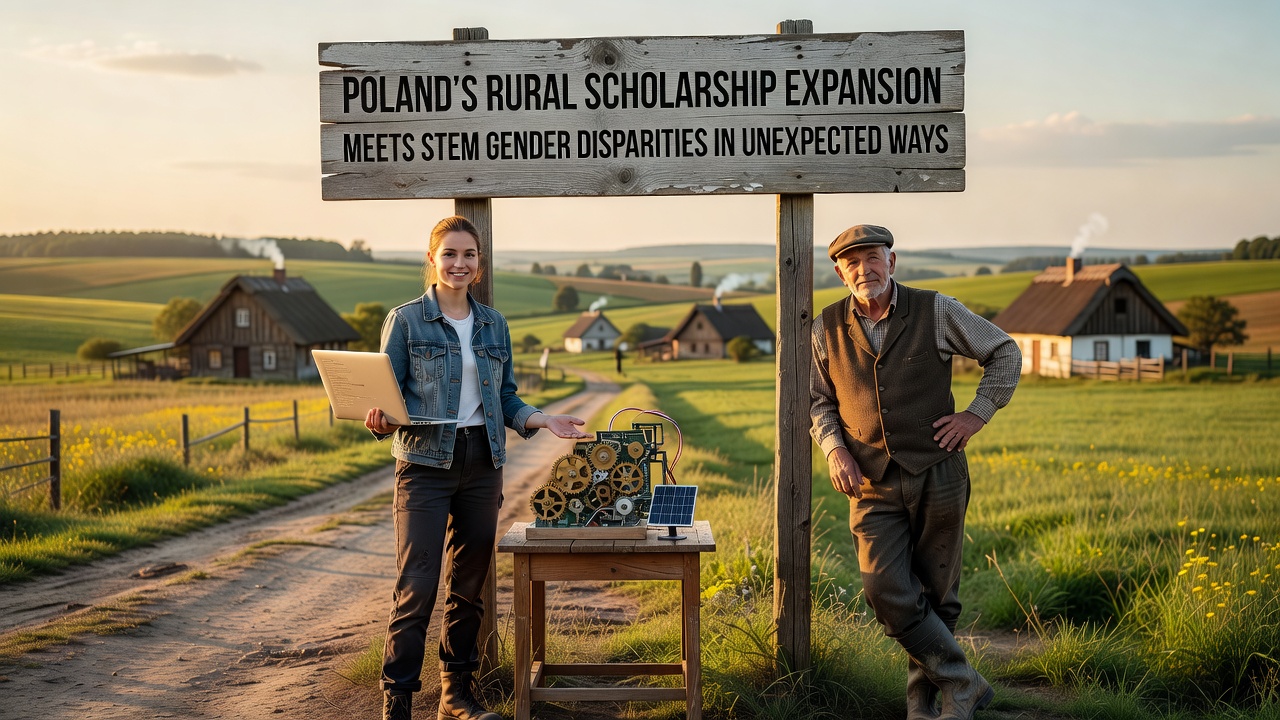
Poland has rolled out expanded scholarship programs targeting rural communities since 2023, with further phases scheduled for implementation in September 2026, and these efforts now intersect with longstanding patterns in science, technology, engineering, and mathematics enrollment across gender lines. Government data from the Ministry of Education and Science shows rural scholarship recipients increased by 28 percent between 2023 and 2025, yet the distribution of these awards across male and female students reveals shifts that differ from initial projections focused solely on access equity.
Expansion of Rural Scholarship Programs
Officials launched the Rural Talent Initiative in 2023 to address lower enrollment rates in higher education among students from villages and small towns, where secondary school completion rates lag urban areas by 12 percentage points according to Statistics Poland figures. The program provides tuition support, living stipends, and mentorship pairings for applicants pursuing technical fields, with eligibility criteria emphasizing residency in municipalities under 20,000 residents. By mid-2025 the initiative had distributed over 14,500 awards, and planners expect an additional 6,200 scholarships to activate in September 2026 as the second funding tranche opens.
Program administrators track participant demographics through annual reports submitted to the European Commission education directorate, which highlights that 47 percent of 2025 recipients identified as female compared with 39 percent in the first year of operation. This marks a departure from earlier national trends where female students from rural backgrounds comprised only 31 percent of STEM applicants overall.
STEM Gender Patterns Before the Initiative
National enrollment statistics compiled by the Central Statistical Office indicate that women accounted for 34 percent of all STEM degree seekers at Polish universities in 2022, a figure that had remained stable for the preceding five years. Male students dominated computer science and mechanical engineering programs at ratios exceeding 3 to 1, while women clustered more heavily in biotechnology and environmental sciences. Observers note these distributions align with patterns documented in OECD education reports across several Central European countries during the same period.
Rural students overall represented just 19 percent of total STEM enrollment despite comprising 38 percent of the secondary school population, creating a clear participation gap that the scholarship program was designed to narrow. Pre-2023 surveys conducted by Warsaw University researchers found transportation costs and limited local preparatory courses as primary barriers cited by rural applicants regardless of gender.
Intersection Produces Unexpected Enrollment Shifts
Early outcome data released in August 2025 shows the scholarship expansion has narrowed the rural-urban STEM gap to 14 percentage points, yet the gender composition within that narrowed gap diverges from expectations. Female recipients have entered computer science and electrical engineering tracks at higher rates than male rural peers, while male recipients show increased uptake in life sciences programs previously underrepresented among rural men. Researchers at the Jagiellonian University documented these patterns through longitudinal tracking of 2,800 scholarship holders from the 2023 and 2024 cohorts.
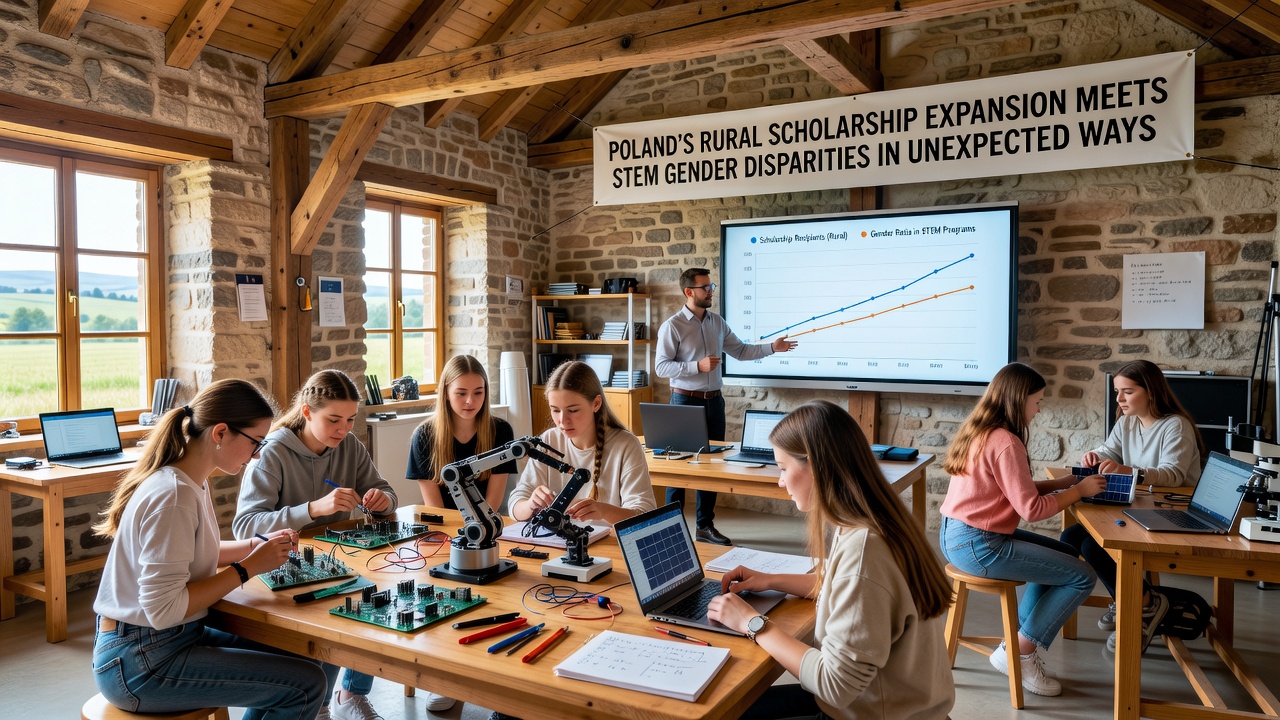
Data indicates that mentorship pairings introduced in 2024, which connect recipients with working professionals in technical fields, correlate with these field-specific shifts. Female participants paired with female engineers in software development reported higher persistence rates into second-year coursework, according to program evaluation summaries. Male participants matched with biologists and chemists demonstrated similar retention improvements, suggesting the mentoring component influences subject selection beyond the scholarship funding itself.
European Commission monitoring reports note that similar rural access programs in other member states have produced more uniform gender distributions within expanded cohorts, making Poland's results stand out in comparative analyses. Program evaluators attribute part of the difference to Poland's existing secondary curriculum reforms that introduced coding modules in rural schools starting in 2022, potentially preparing female students for technical pathways at earlier stages.
September 2026 Implementation and Projected Trends
The upcoming September 2026 expansion adds targeted funding for advanced laboratory equipment in 180 rural secondary schools and introduces summer bridge programs focused on mathematics readiness. Ministry projections estimate that 62 percent of new awards will go to students entering engineering or computer science tracks, with updated gender monitoring protocols designed to capture field-specific data more granularly. Analysts from the Institute of Educational Research in Warsaw have modeled scenarios showing continued convergence in rural STEM participation if current mentoring structures remain in place through 2028.
University admissions offices report that scholarship recipients from the first two cohorts achieved average first-year grade point averages 0.3 points higher than non-recipient rural peers, a margin that holds across both male and female subgroups. This performance indicator suggests the combination of financial support and structured guidance produces measurable academic outcomes beyond simple enrollment increases.
Conclusion
Poland's rural scholarship expansion continues to evolve as September 2026 approaches, with enrollment figures revealing field-specific gender distributions that differ from broader national patterns. Ongoing data collection through university partnerships and ministry tracking systems will determine whether these shifts persist or stabilize over the next funding cycle, providing further evidence on how targeted access programs interact with existing subject preferences in technical education.