Mara Simmons · 22 September 2026
Poland's Visa Processing Delays Disrupt International Scholar Exchanges and Research Partnerships
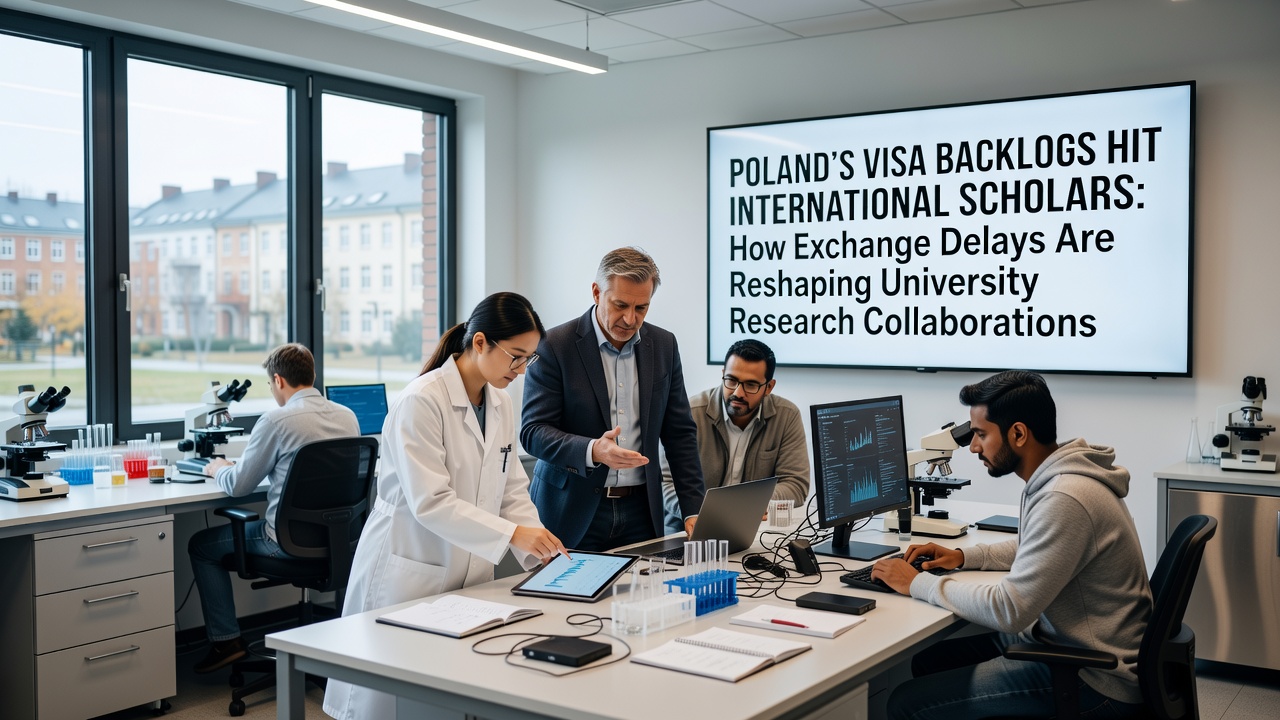
Data from Polish consular offices shows processing times for academic visas extending beyond standard timelines in 2025 and carrying into September 2026, with many applications from researchers outside the Schengen area facing waits of four to eight months. Universities in Warsaw, Krakow, and Wroclaw report that these extended periods have forced adjustments in project timelines, particularly for collaborative grants involving teams from North America, Asia, and Africa.
Current Scale of Application Backlogs
Official figures released by the Polish Ministry of Foreign Affairs indicate that academic and research visa categories accounted for over 12,000 pending cases as of mid-2026, a rise from previous years driven by increased post-pandemic mobility and expanded EU-funded programs. Researchers note that applications submitted through the national e-Visa platform frequently encounter additional document requests, which add weeks or months to final decisions. European Commission reports on intra-EU mobility highlight similar patterns across several member states, though Poland's share of delayed scholar entries stands out in aggregated statistics.
Effects on University Research Timelines
One study conducted at Jagiellonian University tracked how delayed arrivals altered joint physics experiments scheduled for late 2025, with teams from Canadian institutions rescheduling equipment bookings and reallocating budget lines. Data indicates that similar disruptions occurred in biology and engineering departments, where seasonal fieldwork windows closed before visas cleared. Observers note that these shifts often require principal investigators to renegotiate contracts with funding bodies such as Horizon Europe, which imposes strict reporting deadlines tied to calendar years.
What's notable is how institutions have begun building contingency buffers into grant proposals, extending planned collaboration periods by six to twelve months on average. Australian research councils, for instance, documented parallel adjustments when Polish partners cited visa uncertainties as the primary cause for timeline revisions in 2026 submissions.
Shifts in Collaboration Patterns
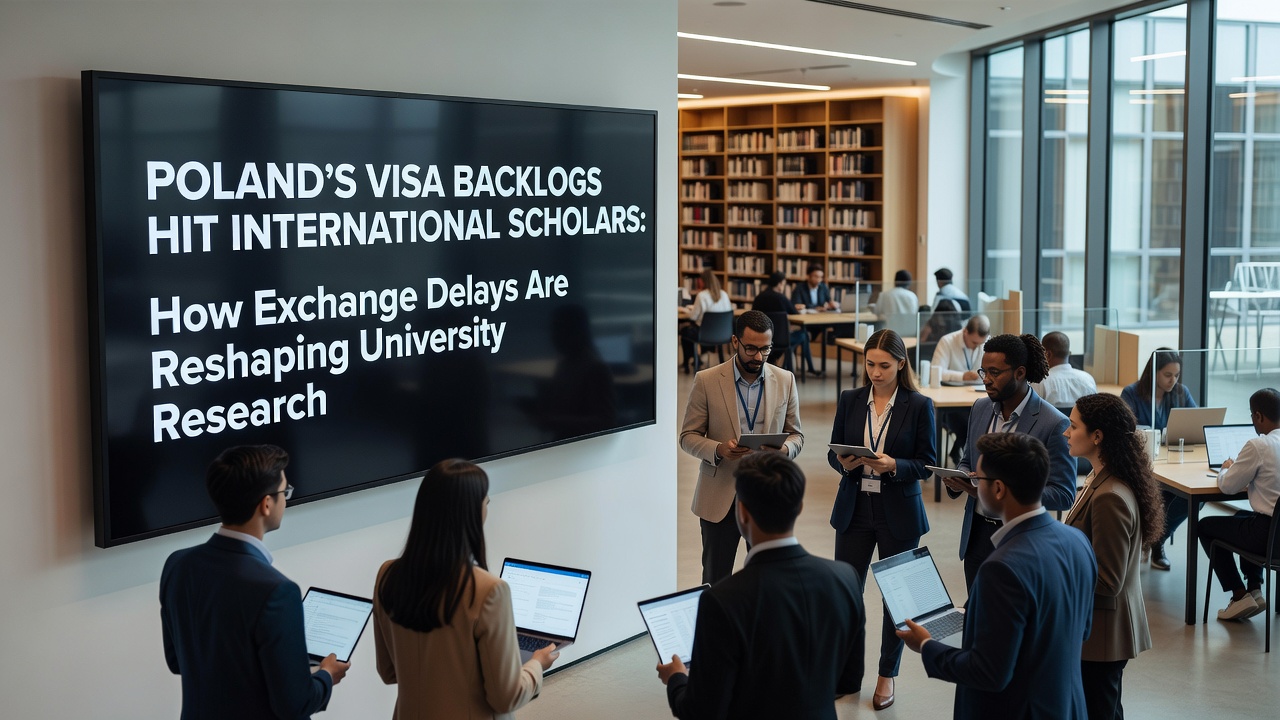
Academic networks have responded by routing more scholar exchanges through partner institutions in countries with faster processing, such as Germany or the Netherlands, before onward travel to Poland. Figures from the OECD's education and migration database reveal a measurable uptick in such triangular arrangements involving Polish universities between 2024 and 2026. Those who've studied these patterns observe that virtual components of projects have increased, with data-sharing platforms and remote modeling replacing some in-person laboratory work.
Take one case where a consortium studying climate adaptation in the Carpathians moved its main fieldwork phase to a Slovenian site after multiple Polish visa applications stalled. The adjustment preserved overall grant objectives while avoiding further slippage, according to project documentation shared with the European Research Council.
Institutional and Policy Responses
Polish universities have expanded dedicated visa support offices, hiring additional staff to pre-screen applications and liaise with regional consulates. A 2026 report prepared by the Conference of Rectors of Academic Schools in Poland lists these measures as standard practice across member institutions. Government sources indicate pilot programs that prioritize academic applicants in select consulates outside Europe, though rollout remains limited to a handful of locations.
Researchers point to similar initiatives in other EU countries as models, including streamlined digital verification used by Swedish migration authorities. These efforts aim to reduce repeat document requests that currently extend processing windows.
Conclusion
Available statistics through September 2026 show that visa processing delays continue to influence how Polish universities structure international research partnerships, prompting greater reliance on hybrid formats and alternative host sites. Data from multiple monitoring bodies tracks these adaptations without indicating any single resolution point, leaving institutions to manage ongoing variability in arrival schedules. Updates from official channels suggest monitoring will continue as new application cycles open.